I Washed My Chopping Board After Every Meal. It Still Smelled Like Garlic.
Helen, 63, from Newcastle, thought she kept the cleanest kitchen on her street. One sniff of her chopping board changed how she cooks — and what she cooks on.
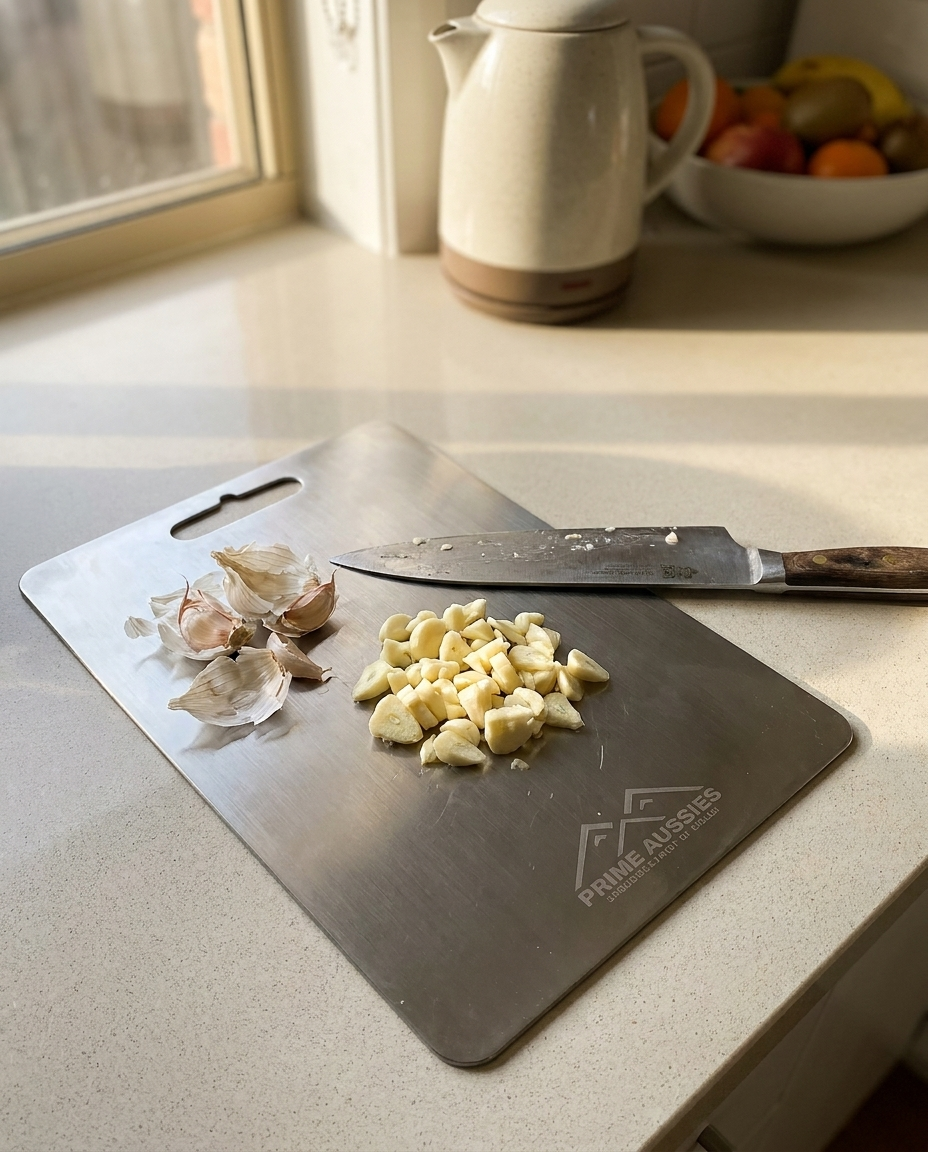
Garlic is the giveaway. If the smell survives the wash, something stayed behind.
I'll tell you exactly how this started. My granddaughter was helping me make dinner, and she picked up my chopping board, wrinkled her nose, and said, "Nan, this smells funny."
I'd washed that board the night before. Hot water, detergent, a proper scrub. I lifted it up and smelled it, expecting nothing.
Garlic. Clear as day. From a meal I'd cooked two days earlier.
I did what most of us would do — I washed it again, harder. Smelled it again. Fainter, but still there. That's when I sat down with a cup of tea and my iPad and went looking for an answer. What I found annoyed me so much I'm writing this.
Try it yourself, right now
Walk over and smell your chopping board — the one you washed after dinner. If you can smell garlic, onion or anything at all, keep reading. A clean surface has no smell. What you're smelling is food that never left.You can't scrub the inside of a knife cut
Here's the bit nobody ever tells you. A chopping board works by being cut. Every meal you've ever made has left tiny knife grooves in the surface. Run your fingernail across an old board and you'll feel them — hundreds of little channels.
A sponge glides straight over the top of those grooves. It never reaches the bottom. So down inside sit tiny traces of every meal — the garlic, the onion, the raw chicken — sealed in where soap and water simply don't go.
That's the smell. It isn't a dirty kitchen. It isn't lazy washing. It's the material.
Plastic is soft, so knives carve into it fast — and researchers have measured tiny plastic particles coming off scratched boards and ending up in food. Wood is porous, so it drinks in juices and smells, and you can't put it in the dishwasher without wrecking it.
The fix isn't scrubbing harder
Once I understood the problem was grooves and pores, the answer was obvious: I needed a surface a knife can't cut into and liquid can't soak into. That's not plastic, and it's not wood.
That's how I found the Prime Aussies Titanium Chopping Board. Titanium is the metal they use in aircraft and surgical tools. It's non-porous — nothing soaks in. And it's harder than a kitchen knife, so it doesn't get those deep grooves in the first place.
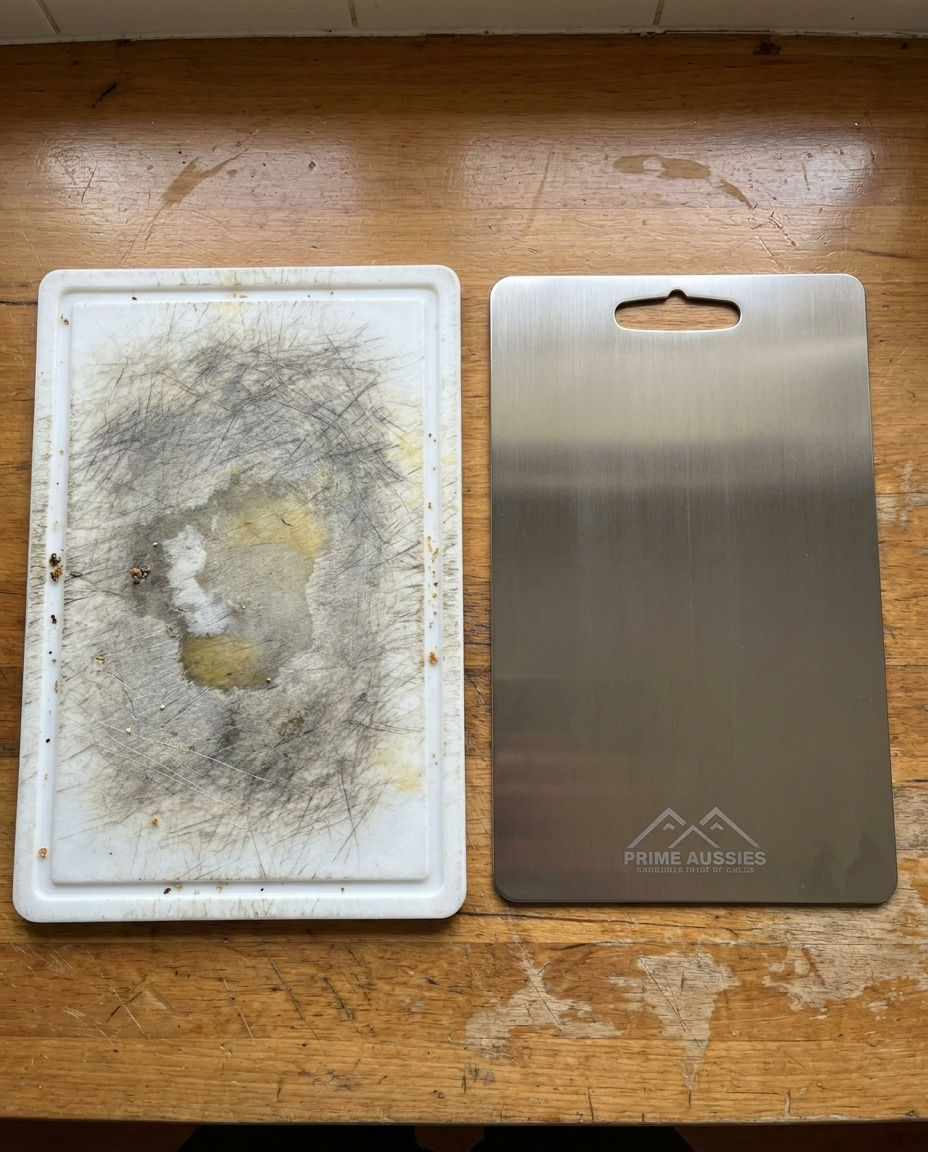
Helen's photo: the plastic board she threw out, next to the titanium one that replaced it.
No grooves means nowhere for food to hide. Nothing gets in, so nothing stays behind. You chop onions, rinse it for ten seconds, and it smells like nothing. Every single time.
Two months in: what it's actually like
The first thing you notice is the weight — it's solid, it doesn't slide around the bench like a cheap plastic board. It goes straight in the dishwasher. It hasn't stained, not even with beetroot, and I tested that on purpose.
And the sniff test? I do it for visitors now. Chop a clove of garlic, rinse the board, hand it over. Nothing. My daughter didn't believe me until she smelled it herself. Then she ordered one.
The honest answers to what I asked before buying
Will it blunt my knives? It's a firm surface, like any hard board — let the knife do the work and hone it now and then. I've noticed no difference in two months.Is it really titanium? Solid titanium, not a coating. Nothing to chip, peel or wear off.
Is it heavy to handle? It has a hanging slot and it's thinner than you'd think — sturdy on the bench, easy to lift with one hand.
The last board I'll ever buy
Here's the part that sold my husband, who thought $59.99 was a lot for a chopping board. I added up what we'd spent replacing boards over the years — the bamboo one that split, the plastic set that went grey, the timber one that warped. It was a lot more than $59.99.
This one can't scar, can't stain, can't warp and can't hold a smell. There's nothing on it to wear out. It's the last one I'll buy, and at my age I appreciate buying things once.
What other owners say
Do the sniff test on this one
Solid titanium. No grooves to trap food, nothing to soak in, no smell — ever. Cook on it for 30 days. If it isn't the cleanest board you've owned, send it back for a full refund.
GET MY TITANIUM BOARDMy old plastic board is gone now, grooves and all. The strange part is how obvious it feels looking back — I spent forty years washing something that was never actually getting clean.
Go and smell yours. You'll know in ten seconds whether this article was for you.